
when in vietnam (issue #28)
a foodie's guide to hanoi. plus, a recipe for patê sô/pâté chaud pithiviers

Traveling solo for the first time is daunting, and even more so when everyone I have ever known is UTC -4, an entire eleven hours behind my UTC +11 and sound asleep in the peak of my day. I spent the entire first five days almost entirely alone, silent save for short and stilted attempts at conversation in a kintsugi of broken Vietnamese and English. Yet, in bustling Hanoi, alone on the other side of the world, I have never once felt lonely.
There is an art to doing it alone: you find your own rhythms and patterns, wandering and exploring at your leisure. You lose yourself, or whatever image was superimposed onto you, removed from stultifying schedules and deadlines and identity pressures. You learn your core values and listen to your unobstructed intuition.
I lost and found myself in the clutter of the city.
Week two in Vietnam, and I have yet to get tired of Vietnamese food.
Back in America, it’s hard to find much beyond the classics: phở, bánh mì, or grilled meat with either bún (vermicelli rice noodles) or cơm (rice). The appetizer menu usually features gỏi cuốn (“spring rolls”) or chả giò (fried “spring rolls”). I can tell you from a lifetime of experience that Eden Center in Falls Church, Virginia has a truly impressive range of authentic and delicious Vietnamese dishes, but outside of the few large Vietnamese diasporas in the U.S., you generally have to know what you’re looking for in order to find the true diversity of the cuisine.
In the heart of Hanoi, you can find a wide range of Vietnamese dishes—still, somehow, one city can’t capture the full breadth of the Northern, Central, and Southern cuisines of Vietnam. If you’re only going to Hanoi, though, dishes you absolutely must try, beyond phở and bánh mì, are bún chả and bánh cuốn, among others. If you’re staying for a while, seek out the lesser-known bánh giò or bánh đúc nóng. Here are some of my favorite spots—so far.
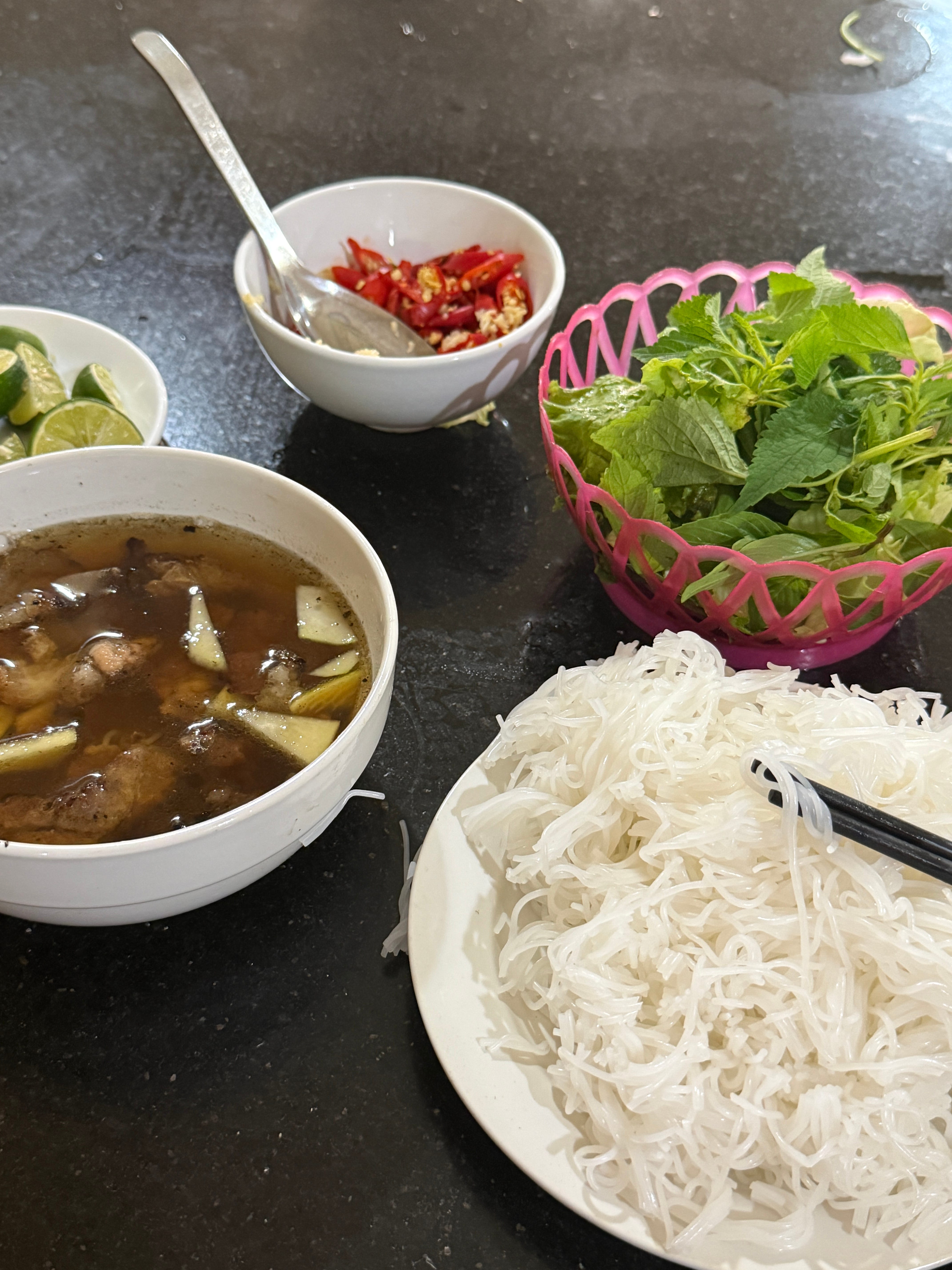
For bún chả: The quintessential dipped-noodle dish, popularized as an American tourist attraction by Obama and Anthony Bourdain’s televised dinner at Bún Chả Hương Liên, right here in Hanoi. From firsthand experience, I can tell you that this particular spot is dramatically overrated—perhaps it was good back when they first came, but quality seems to have dropped as prices and demand rose. The broth lacked flavor, and the nem hải sản (seafood roll) was oleaginous.
If I’m being entirely honest, the very best bún chả I’ve had on my trip so far was not in Hanoi at all, but a two-hour train ride away in beautiful Ninh Bình, a destination I would absolutely not miss if you’re traveling all this way to Vietnam. Ninh Bình is a popular tourist destination, and so naturally the majority of restaurants in the heart of Tam Cốc cater to the Western palette. On my last day, though, I took a Grab (think Vietnam’s Uber equivalent) away from the noise to a little local eatery full of Vietnamese businessmen on lunch break and an assortment of Vietnamese families and longtime residents.
The bún chả there was noticeably different from the version served in Hanoi. Rather than a bowl of broth containing grilled pork belly slices and small pork meatballs, Ninh Bình’s take, known as bún chả quạt, typically features a single large, flat square of grilled minced pork served separately from the dipping sauce. The rice noodles (bún), too, are different: instead of being served loose, the noodles are pressed into sheets called bún lá and cut into neat squares, making them easier to pick up and dip into the savory nước mắm sauce.
At Bún Chả Quạt Ngõ 5, the pork patties are charcoal-grilled to order right at the front of the restaurant. The result is a beautifully charred exterior with crisp edges that give way to a juicy, flavorful interior. The noodles, too, were a highlight, holding their square shape even after being drenched in dipping sauce, and with a springy and bouncy texture that made for a satisfying bite.
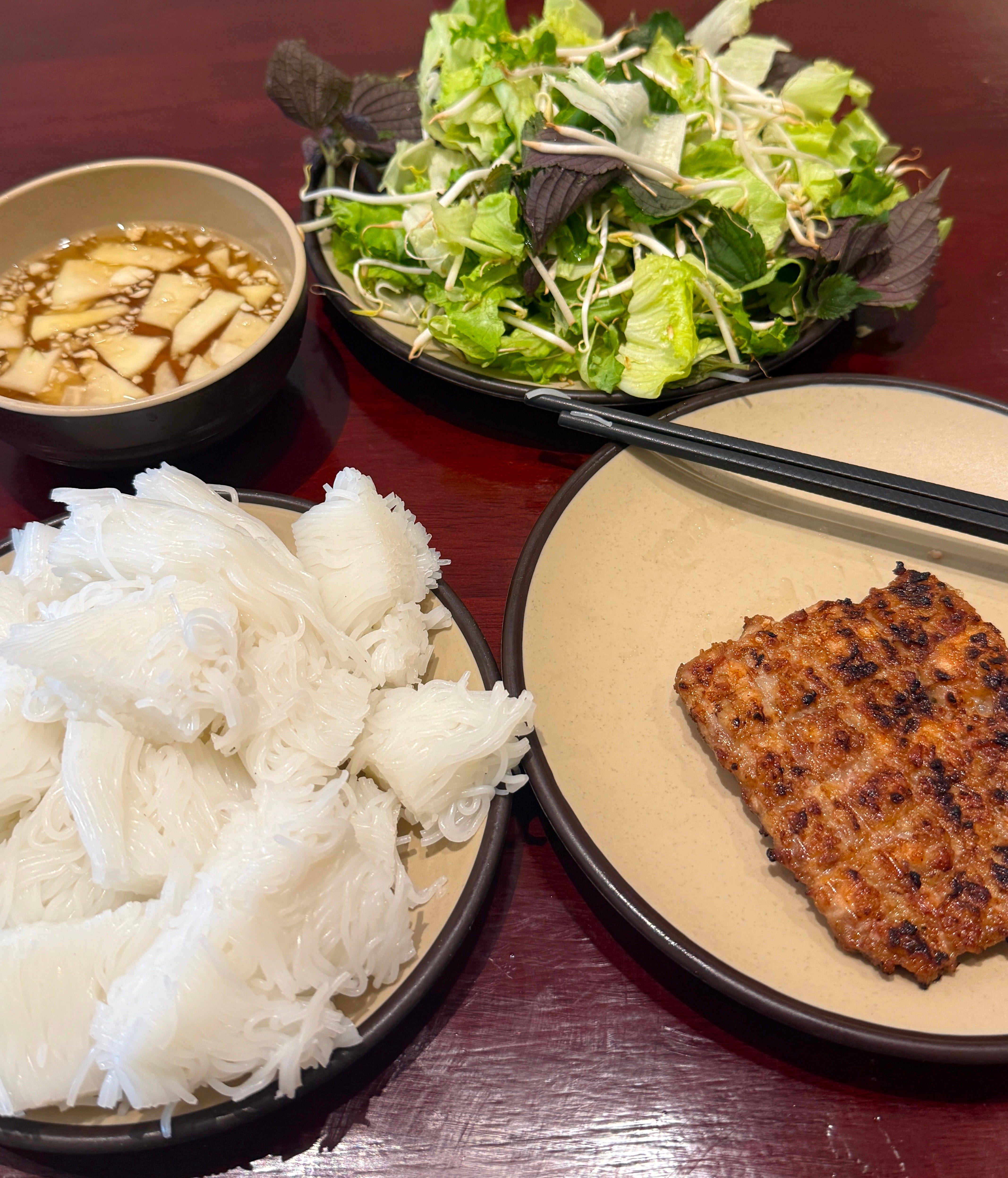
If you don’t have time to make the trip to Ninh Bình, there’s no need to worry—bún chả is abundant all around Hanoi, from humble streetside Bún Chả 74 Hàng Quạt to the slightly more upscale Bún Chả Hà Nội. If you happen to be visiting the Bát Tràng Pottery Village just outside the city, Bún Chả Quán Ngon 124 is delicious a hole-in-the-wall nearby.
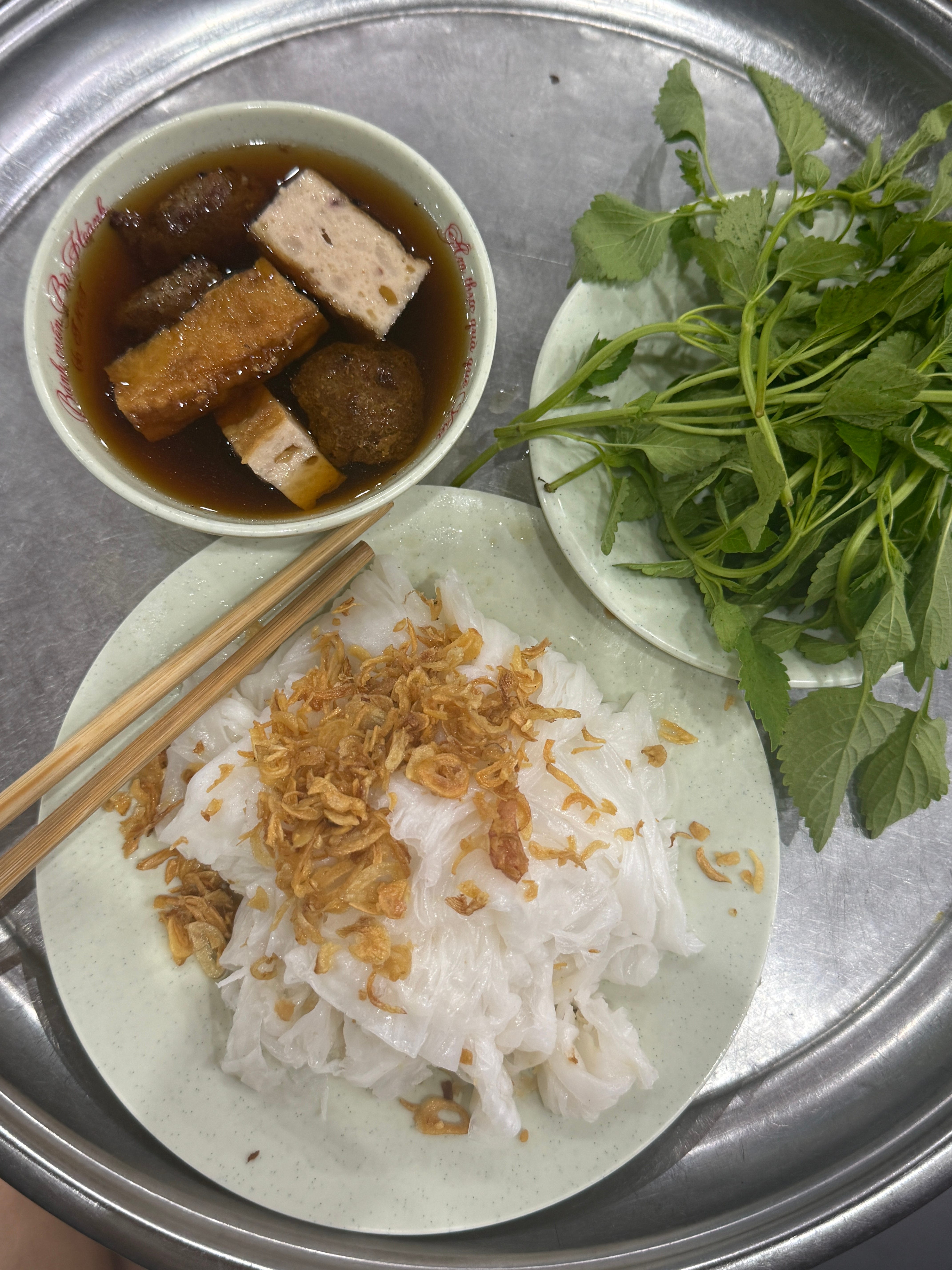
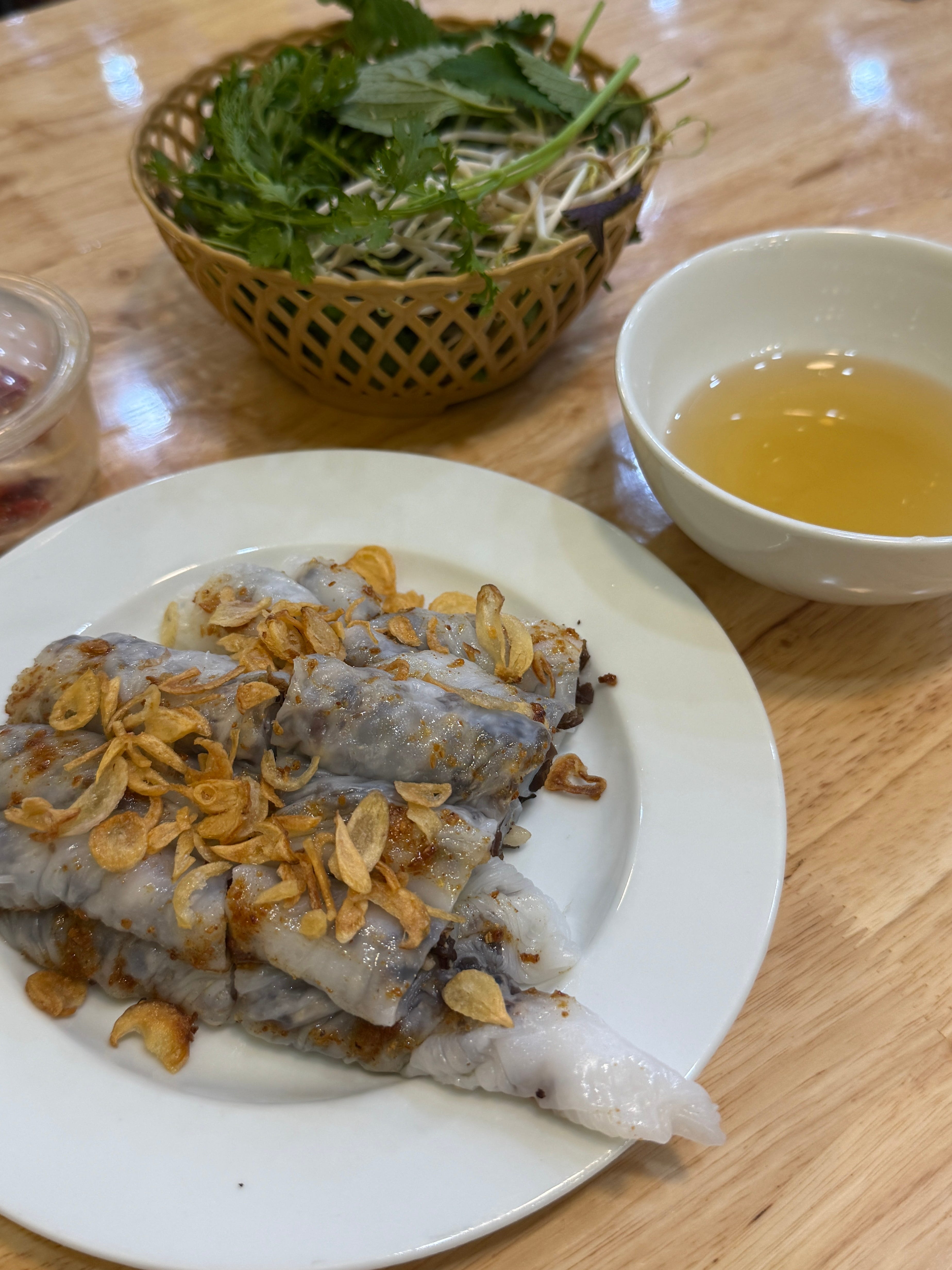
For bánh cuốn: These delicate Vietnamese-style steamed rice rolls, similar to Chinese cheung fun, are made from thin sheets of steamed rice batter and typically filled with seasoned minced pork and wood ear mushrooms. They are often served with fresh herbs, crispy fried shallots, and a savory fish sauce-based dipping sauce. Many vendors also serve them with slices of chả lụa, a classic Vietnamese pork sausage, for an extra layer of flavor and texture. In some variations, the rolls are served unfilled, appearing as broad, paper-thin sheets of rice noodle folded into layers that are perfect for soaking up the accompanying sauce.
At Bánh Cuốn Bà Hoành, you can try a variety of bánh cuốn styles: filled or unfilled, and served alongside accompaniments such as chả lụa, grilled pork belly, or meatballs. Each sheet of bánh cuốn is steamed fresh, one at a time, as orders roll in. The restaurant also offers an extensive selection of traditional Vietnamese snacks and side dishes, including bánh bột lọc—chewy tapioca dumplings filled with shrimp and pork—and both sweet and savory versions of bánh rán, Vietnamese-style fried doughnuts.
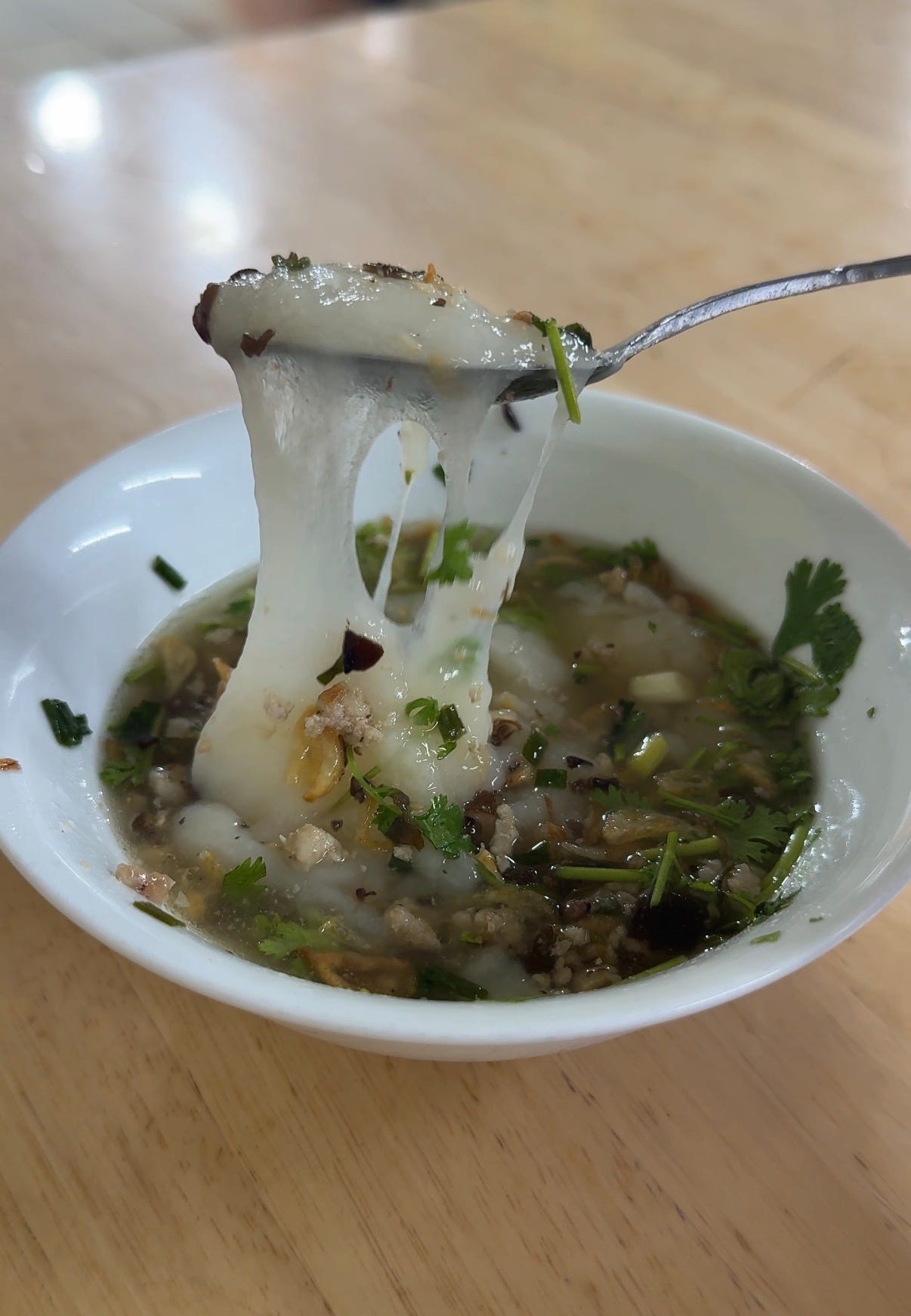
For Bánh Đúc Nóng: This is one dish I had never tried in the States; it’s a lesser-known Vietnamese comfort food made from a soft, warm rice cake served in a savory broth. The rice batter is cooked until it forms a smooth, mochi pudding-like texture, then ladled into a bowl and topped with minced pork, fried shallots, and sometimes mushrooms or herbs, all brought together with a light, flavorful fish sauce-based broth.
Just around the corner from a street full of cute local clothing stores is Bánh Đúc Nóng Trung Tự, tucked in a dingy alleyway and dishing out massive bowls for less than a dollar. This bowl is all about textures: soft, slippery mochi; hot, rich broth; crumbles of ground meat; bouncy wood ear mushrooms; crunchy fried shallots. Bánh đúc is better than a cheese pull.
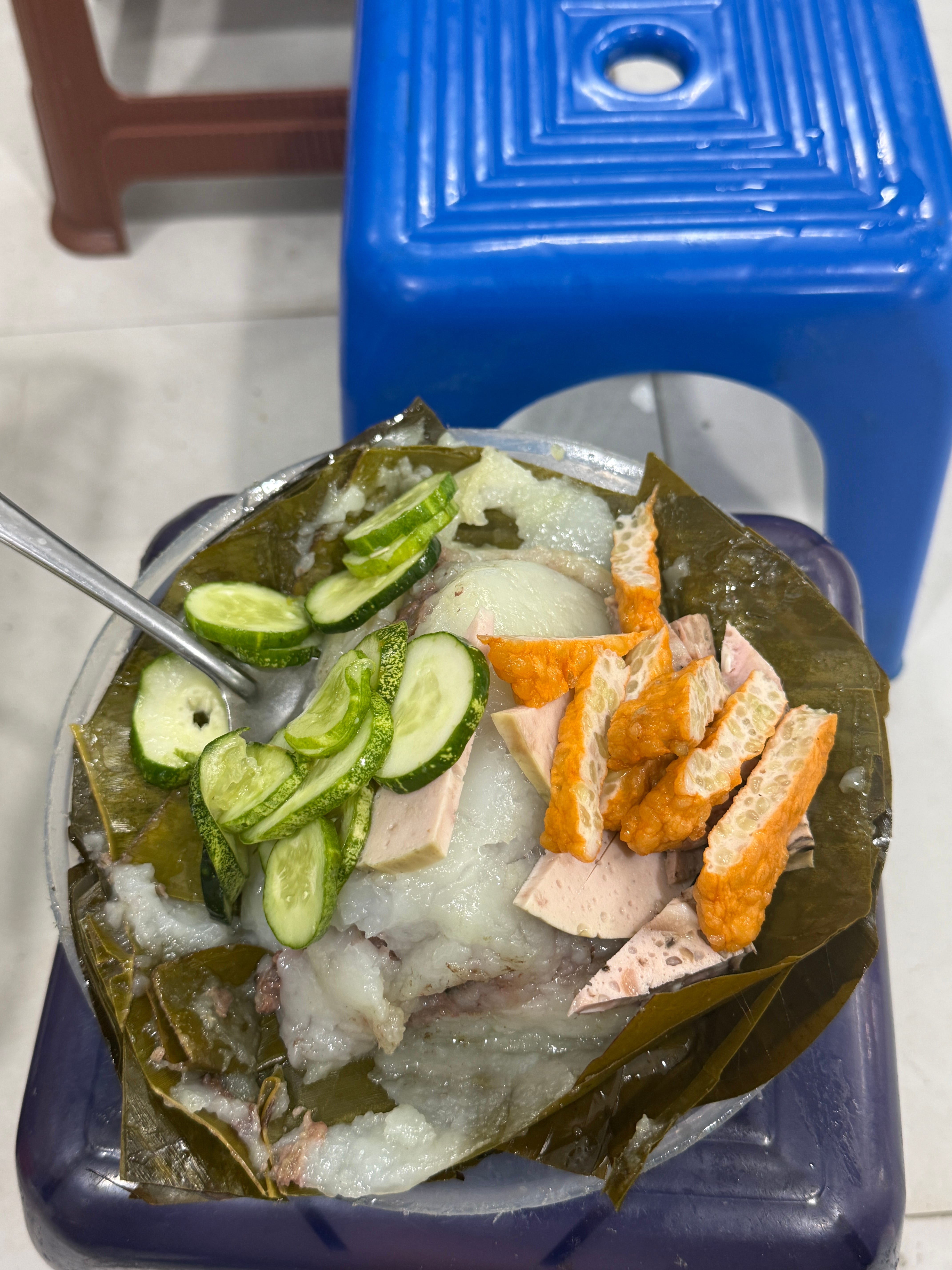
For Bánh Giò: Vietnamese cuisine has many delicious things that come wrapped in banana leaves, and though they’re all quite good, one of my favorites is bánh giò—a soft and silky rice flour dumpling with a deeply savory, satisfying meat filling, steamed in a banana leaf folded into a neat triangular prism, which lends each bite a gentle, grassy aroma.
For a large and loaded plate of bánh giò, go across the street from beautiful West Lake (Tây Hồ) to Bánh Giò Cô Béo, where both the tables and chairs are little plastic stools and there’s a steady flow of locals eating piping hot bánh giò alongside refreshing Vietnamese-style pickled cucumbers and an assortment of different chả. The cucumbers add the perfect sharp crunch and acidity, cutting through the soft, pillowy dumpling, and though all the chả were bursting with flavor, my favorite was the chả cốm, which is mixed with young sticky rice—fragrant, chewy, and addictively sticky.
Other dishes and restaurant recommendations:
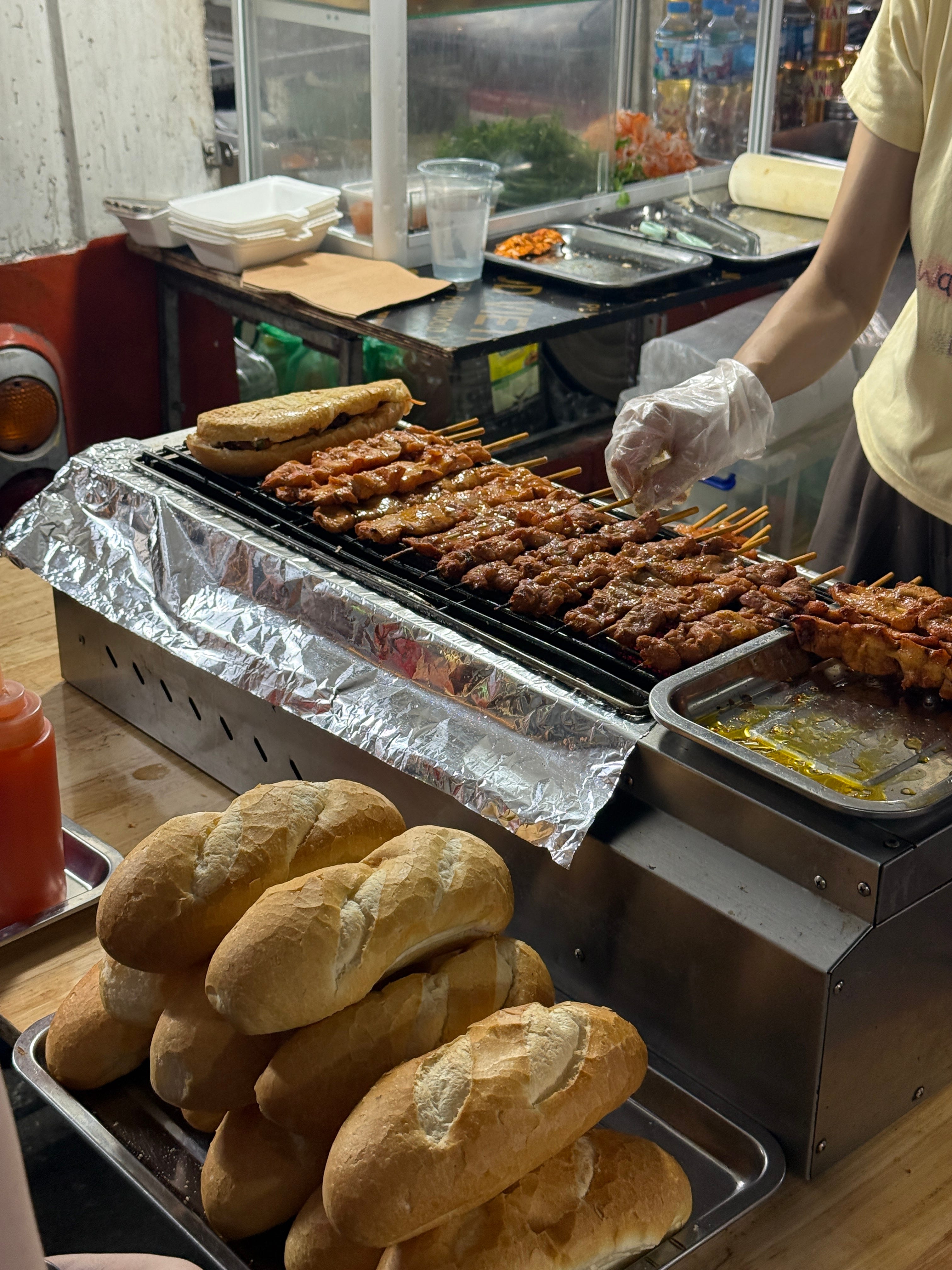
Xôi, or sticky rice often served with with mung bean and fried shallots, from Xôi Yến. You can choose from three kinds of sticky rice and any combination of toppings, and it comes with crunchy pickled cucumbers. I recommend the xôi xéo (turmeric sticky rice) and ordering the thập cẩm, which has a little bit of everything—chicken, pork floss, Chinese sausage, chả, patê, a pan-fried boiled egg, and more.
Phở cuốn, a dish somewhere between phở and bánh cuốn, featuring sheets of soft, bouncy, uncut rice noodle—thicker than bánh cuốn and closer to what you’d find in actual phở—wrapped around stir-fried beef and fresh herbs like cilantro, basil, and lettuce and paired with a sweet-and-salty nước mắm. I enjoyed mine with a waterfront view at Phở Cuốn Hưng Bền, but just down the street are two other spots that are just as popular, Phở Cuốn Chinh Thắng and Phở Cuốn 31.
Chả Cá Lã Vọng is one of the few iconic Hanoi dishes I still haven’t tried here in the city, partly because I’m convinced that when I finally do, it won’t quite live up to my mom’s version. The dish features turmeric-marinated fish, pan-fried tableside and piled high with fragrant dill and green onions, then eaten with rice noodles. You can find it at restaurants like Vua Chả Cá (which has multiple locations) or Chả Cá Hề, though be aware that most places don’t offer single-serving portions and tend to be on the pricier side. I also can’t say for certain whether these restaurants’ versions are geared more toward tourists than locals. Still, given its place in Hanoi’s culinary canon, it’s a dish well worth seeking out.
As I eat my way through the city, I’ll continue to share my favorite bowls of bún and broth and breads. Vietnam’s food scene is endlessly rewarding, and it always feels like there’s another tiny plastic stool waiting around the corner.
If you’re looking for a little taste of Vietnam back home, these pâté chaud pithiviers put a fun twist on a Vietnamese bakery classic. The filling features the holy trinity of Vietnamese savory flavors—ground meat, fish sauce, and wood ear mushrooms—a combination that appears in countless dishes, from bánh giò and bánh cuốn to bánh chưng and steamed buns. Wrapped in buttery, flaky pastry, they’re a Vietnamese-American bakery staple that’s the perfect introduction to Vietnamese flavors.
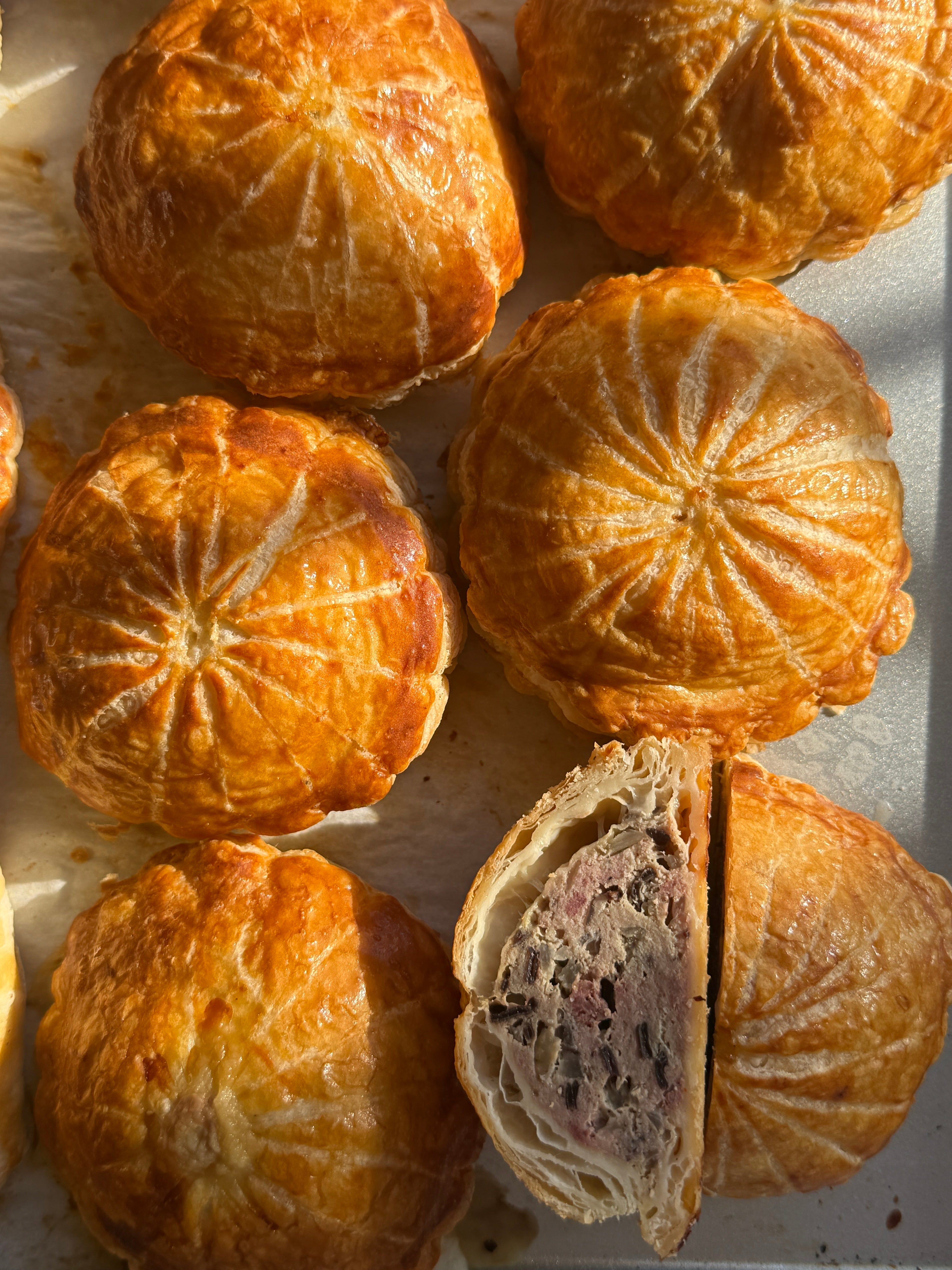
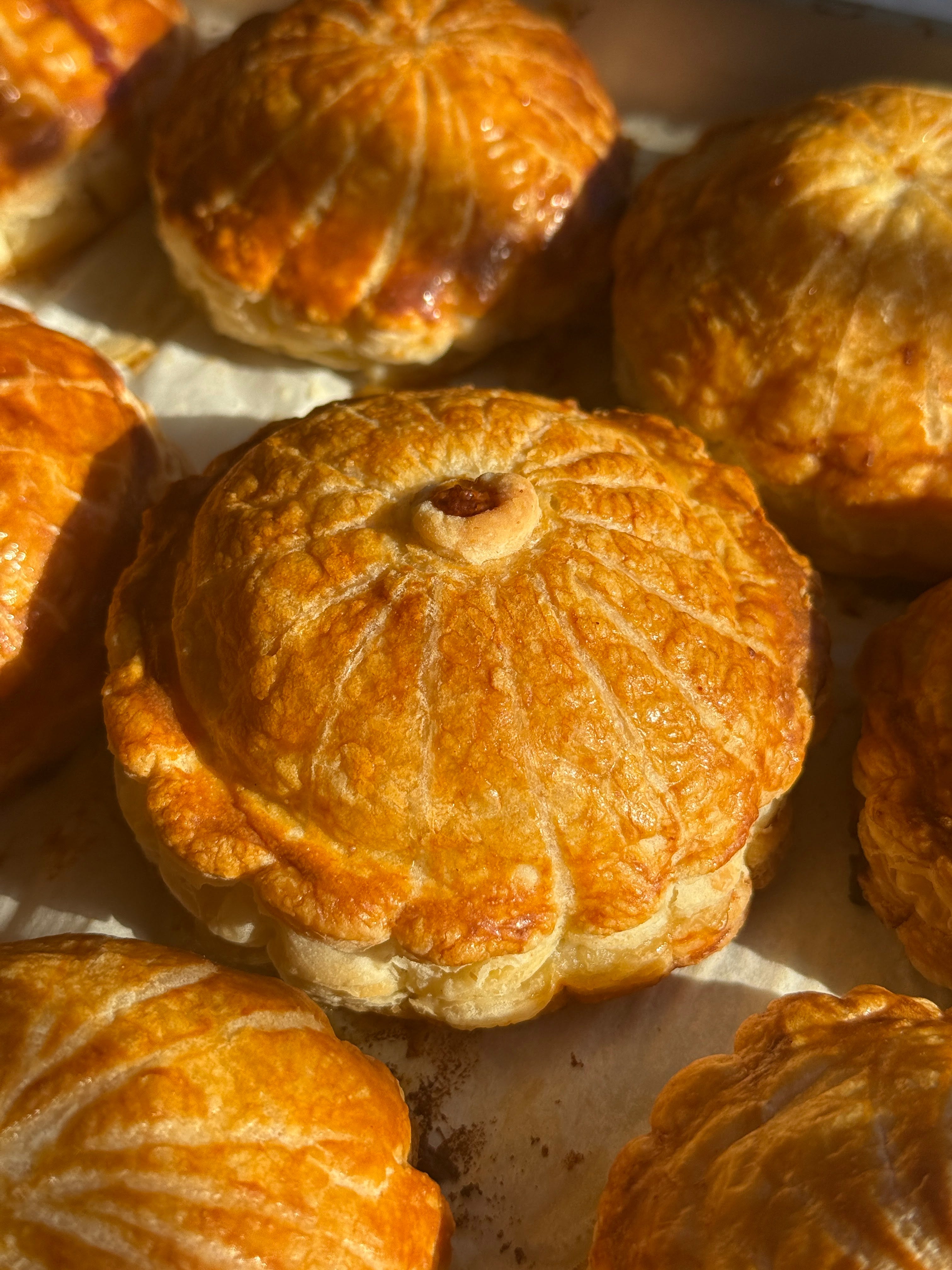
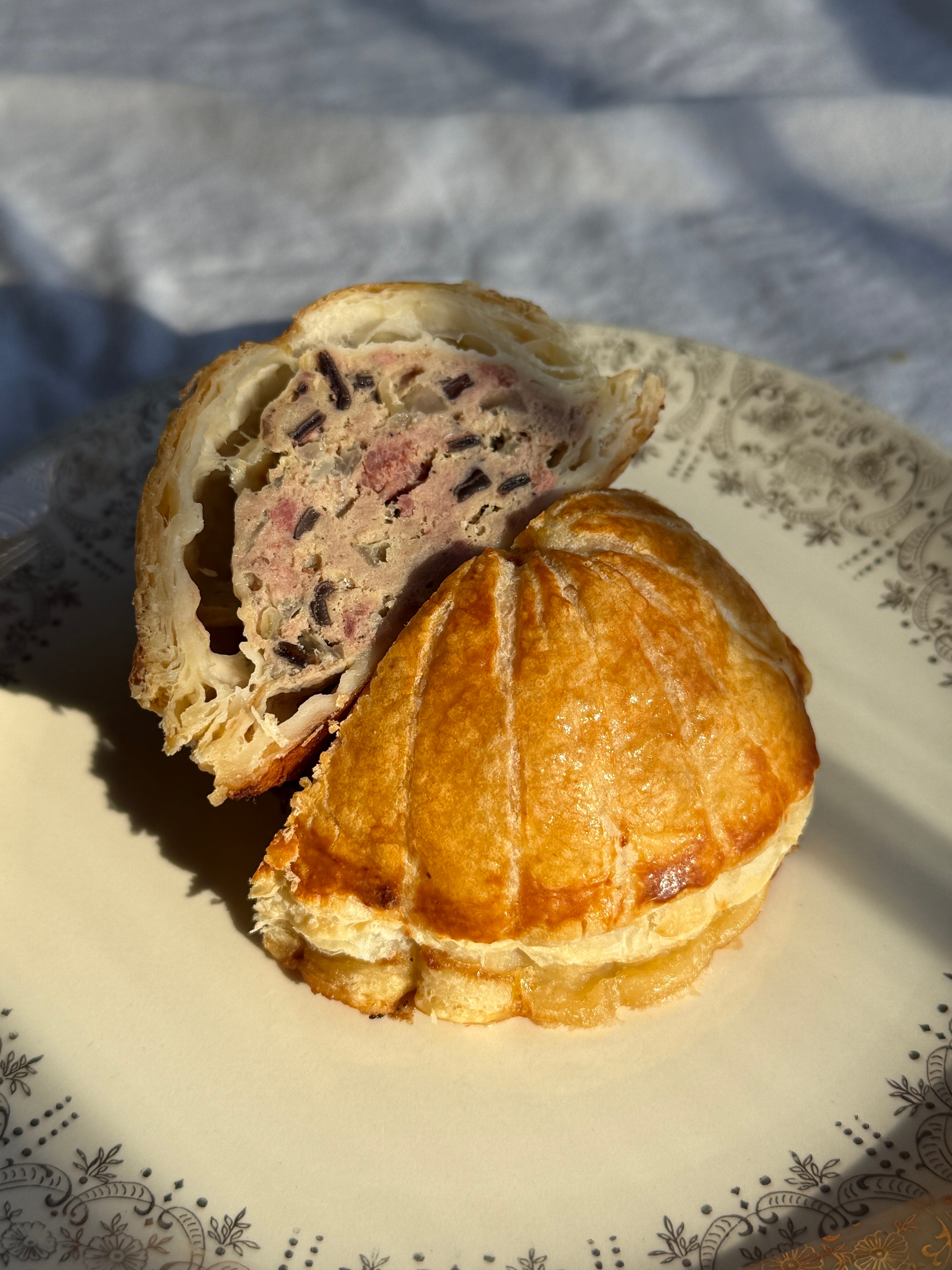
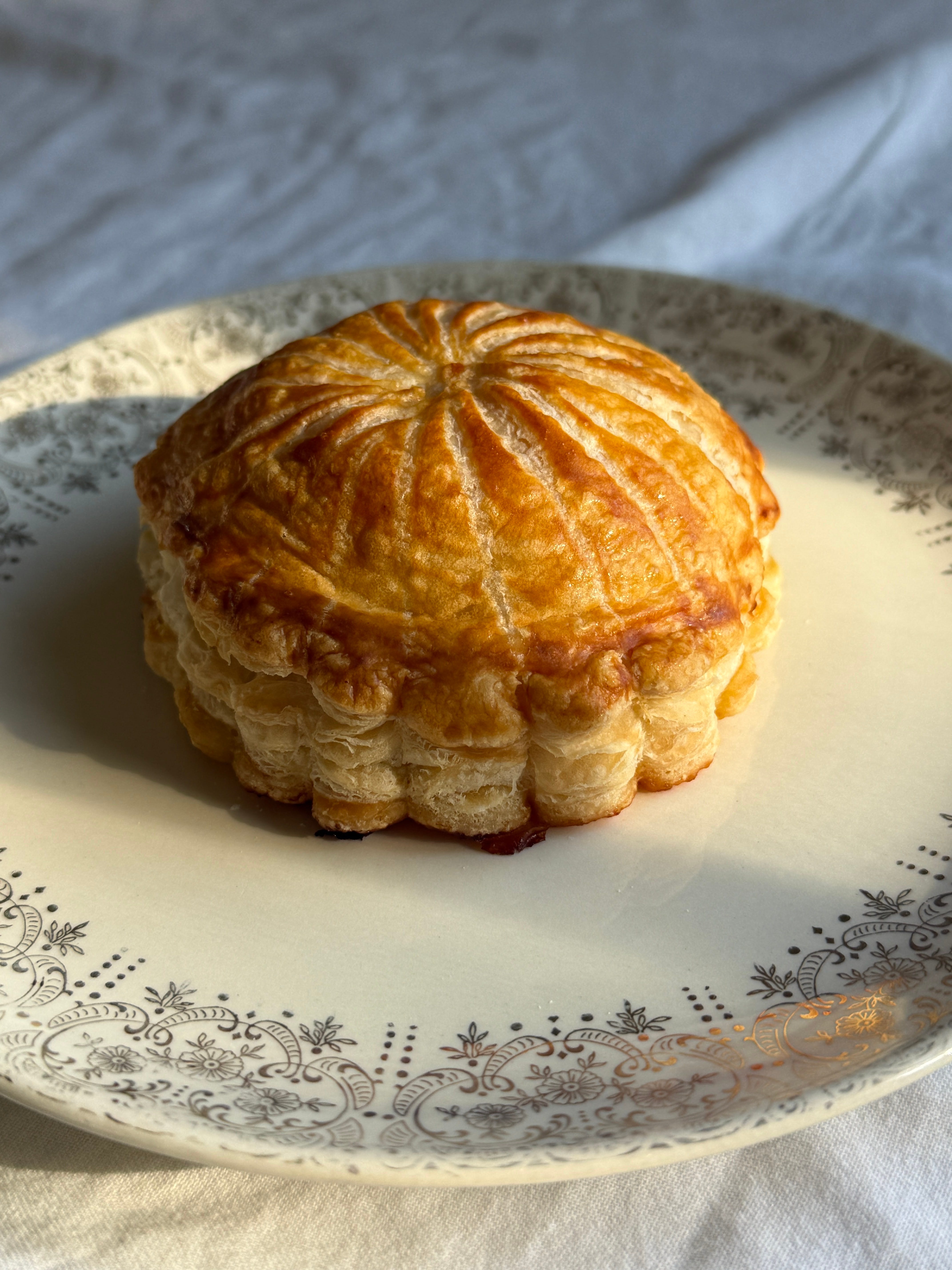
Patê sô/Pâté chaud Pithiviers
Ready in 2 hours, plus chilling. Serves 8 large rectangular pâté chaud, or 12 smaller pithiviers.
