
june edition, vol. 26
when in vietnam. plus, a recipe for a refreshing chè fruit tart

Hair flying in slipstream of a vespa. The utopia of absolute heat, stifling heat, liberating heat. Leashless dogs. Ladies gathering under a mango tree, little green xoài keo, necks craning, eyes squinting. Fruits glow and glisten like the lanterns at night, surreal and reckless in their abundance, which against all reason does little to diminish their value. Shopkeepers pantomime a good deal, the price of dignity incalculable. Serif or sans-serif street typography advertise every bún and cơm and bánh, and every đặc biệt is exactly that. Men gather on plastic stools with fried food, a glistening golden vat of bia towering over each flimsy table, the proof lower than their plastic seats. Little desiderata and their vendors cram into tight streets, souvenirs and sleeping bodies spilling across the cold tiled floors of each little shop. Smiling old women beckon me in for a cold cup of freshly squeezed nước mía, spent sugarcane piling at their feet. The vespas braid through traffic, their subtle art of slowing and stopping. The sun, a spotlight on the performance of the quotidian. I slip into the ensemble.
And then, one fairy night, May became June.
The Beautiful and Damned, F. Scott Fitzgerald
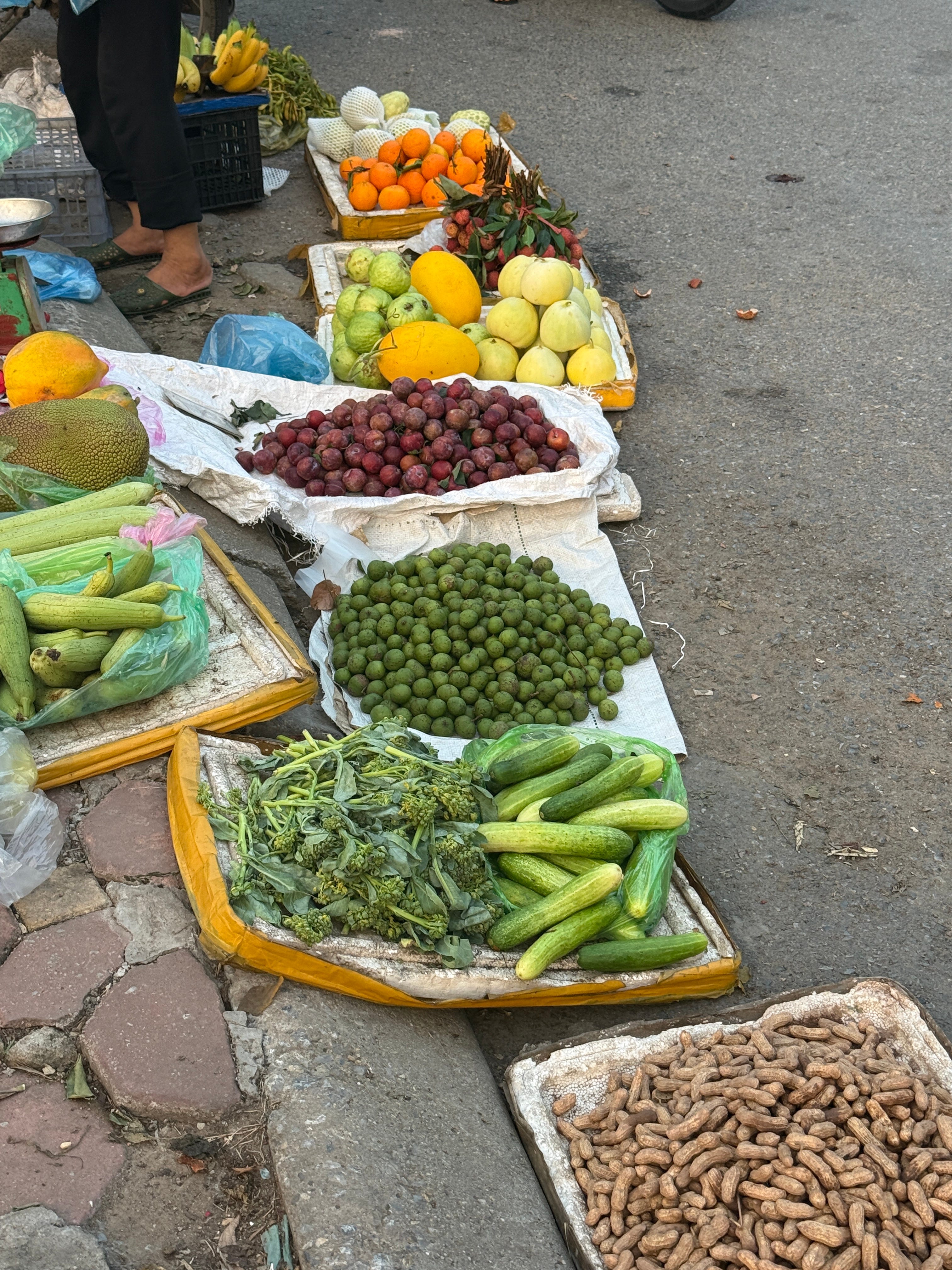
I have been in Vietnam for barely over a week and I have eaten fresh fruit the likes of which I could never imagine. Golfball-sized lychee, perfectly crisp rose apples, deeply golden fresh jackfruit, smooth and sweet ripe mango. The range of fruit here is completely different from what I’m used to in America, where summer means berries and stone fruit. Here, though, durian is abundant, and fruits like mangosteen, mango, jackfruit, lychee, and longan are my grocery store go-tos. Green grapes and apples are easy to find as well, but they’re noticeably more expensive than local produce. The most common stone fruit I’ve encountered is mận hậu, a tiny little deep purple plum with a sweet-tart flavor that stains your lips and fingertips with violet juice. Pineapples and papayas are also popular, with a much sweeter flavor than in the U.S.—I’ll admit that I’ve never been much of a papaya fan back home, as they often have a slightly funky, stinky-sock aftertaste, but here, they’re so sweet, juicy, and fragrant that I find myself reaching for them surprisingly often.
Vegetables, rau, are central to Vietnamese cuisine: nearly every dish is served alongside a heaping bowl of gorgeous greens and herbs: assorted lettuce, lá lốt (betel leaves), mint, cilantro, Thai basil, perilla leaves, bean sprouts, as well as a little calamansi to squeeze over for a little hit of citrus. I find these a perfect way to add freshness and balance to the rich broths and grilled fatty meats. The Vietnamese also do pickles extremely well, with things like daikon and carrots adding a sweet-sour crunch to bánh mì and more. IAs much as I’m enjoying the produce here, I’d be lying if I said I wasn’t missing heirloom tomato season back in the States. Slice one open for me, and sprinkle it with some fancy flaky salt.
it’s june after all & you’re young / until september
Because It’s Summer, Ocean Vuong
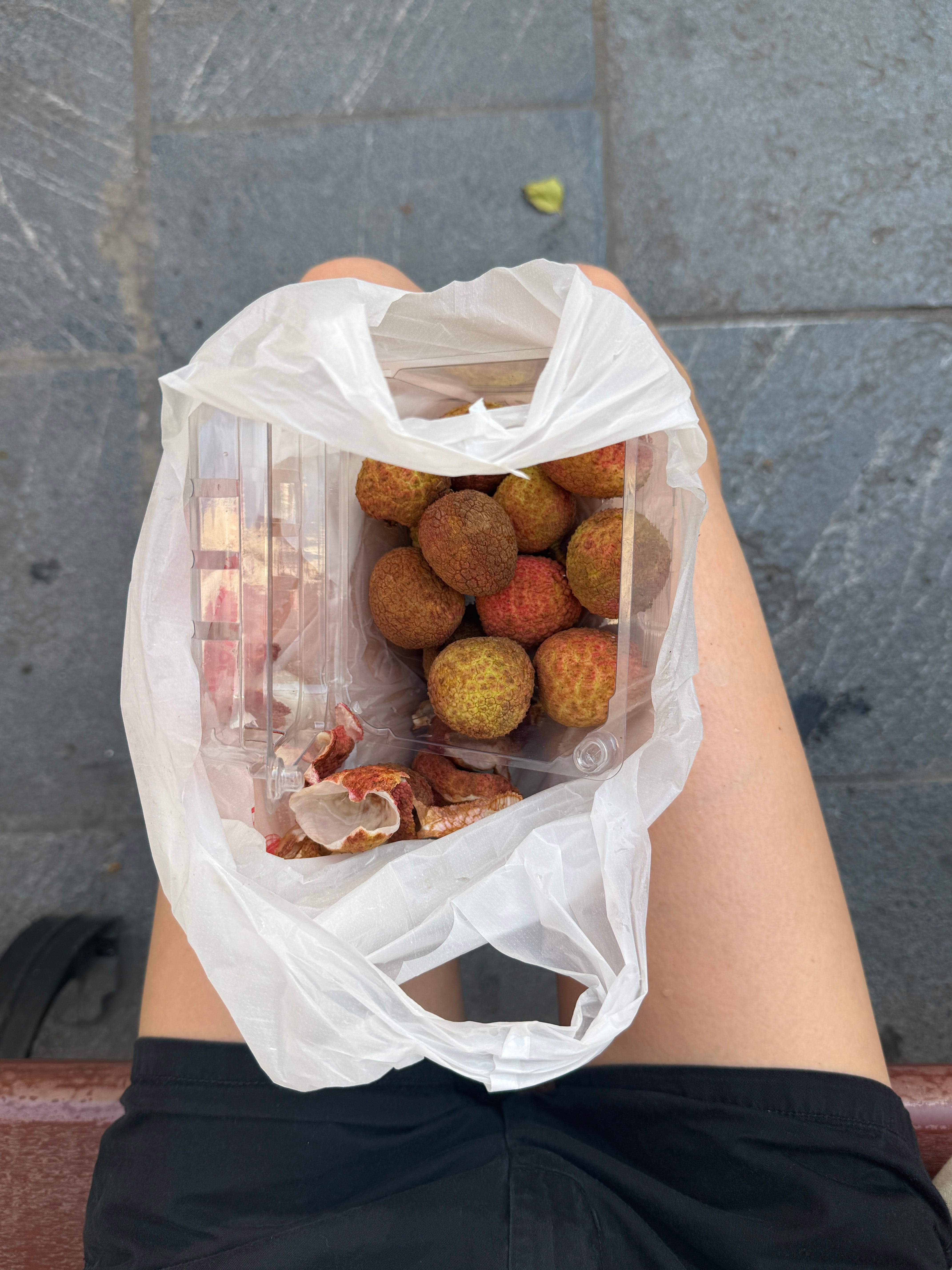
As I sink my teeth into a life-altering lychee, my mind wanders immediately to its potential applications in baked goods, but the Vietnamese know that there is nothing you could do to improve on such fruit.
Euro-American desserts commonly feature fruit that has been sugared and cooked and generally improved upon: crisps, crumbles, and cobblers; upside-down cakes and fruit-studded loaves; cooked into curds and folded into custards. The majority of these methods, if not all, can be traced back to methods of preservation, developed to sweeten, soften, and transform fruit that is sour or spoiling. Though there are a plethora of baked, steamed, or boiled desserts in Vietnamese cuisine, you’ll notice that they often feature flavors like mung beans or pandan or rice or tapioca—ingredients whose flavors and textures are similarly enhanced through cooking. Fruits, however, often appear in desserts in their raw forms, a category of food in and of themselves without any alteration necessary.
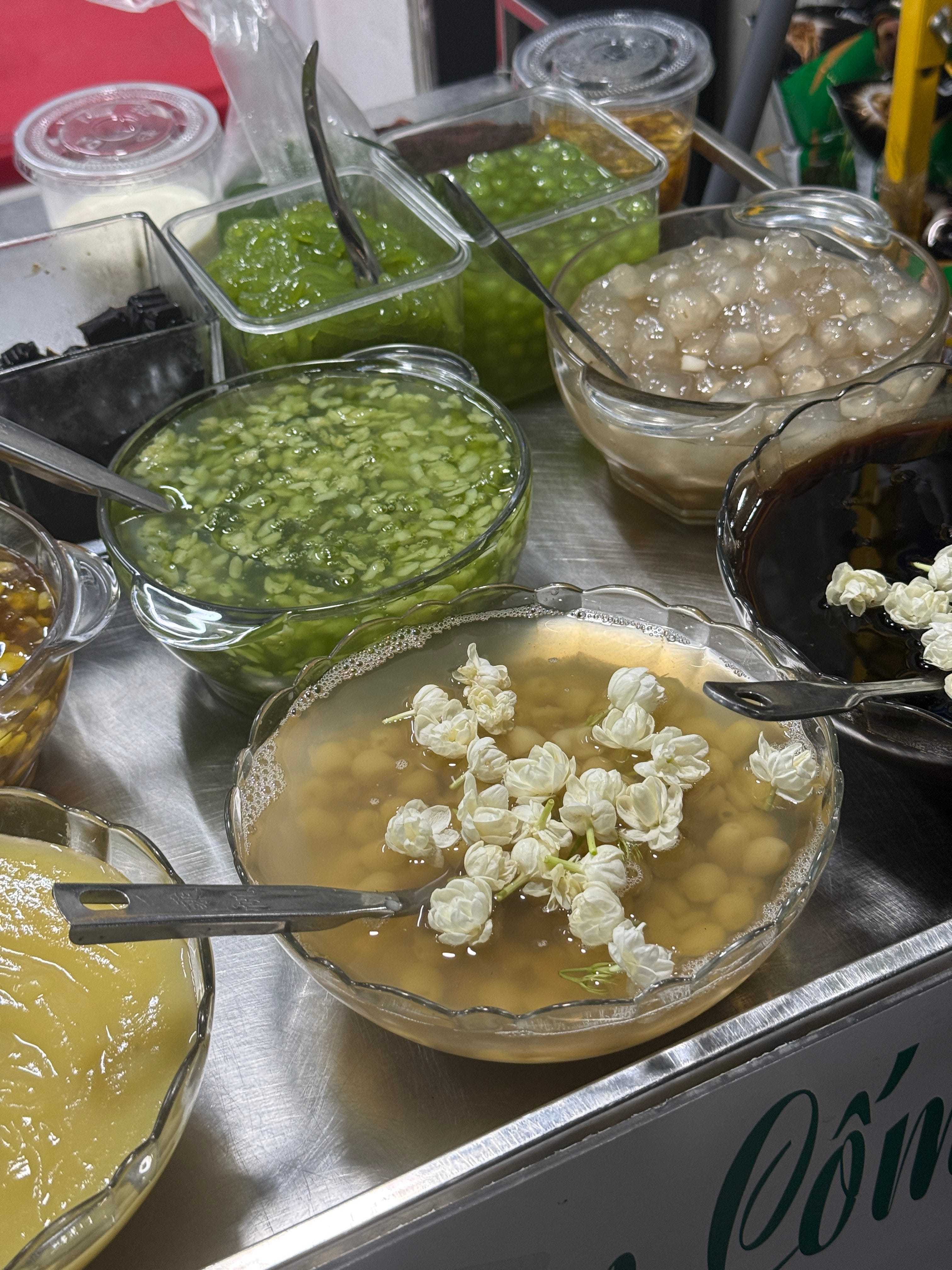
The most common style of Vietnamese dessert is chè, a sweet soup that appears in a rainbow of forms. There is warm chè and cold chè; chè with beans or jellies or fruits or a little bit of each; syrup- or coconut milk-based chè; red and green and yellow and white chè. Even under the same name (chè bắp, chè chuối, chè Thái), no two bowls are alike, each with different components and ratios.
Many cold varieties of chè incorporate fresh fruit: longan floating in lightly sweetened syrup, slices of jackfruit tucked between strands of jelly, cubes of mango or lychee nestled among crushed ice and coconut milk. What is striking is how rarely the fruit itself is transformed: rather than being baked into a pie, stewed into a compote, or reduced into a jam, it is left largely intact. The role of the dessert is not to alter it but to frame it, surrounding it with textures of jelly, bean, ice, and coconut milk that accentuate rather than obscure its qualities. The fruit remains recognizably itself.
My chè fruit tart upholds this philosophy, framing a field of blooming fruit in a pale, crisp, toasted coconut pâte sucrée, cushioning it on soft and smooth coconut crème pâtissière. Both the crust and the custard contain minimal egg yolks, balancing them out with whites for a lighter flavor to allow the fruit and the subtle coconut to shine. In America, particularly in early summer, fresh jackfruit, lychee, and longan is expensive and hard to come by. Instead, canned fruits are more commonly used—but if you can find it, splurge on some fresh fruit for this tart.
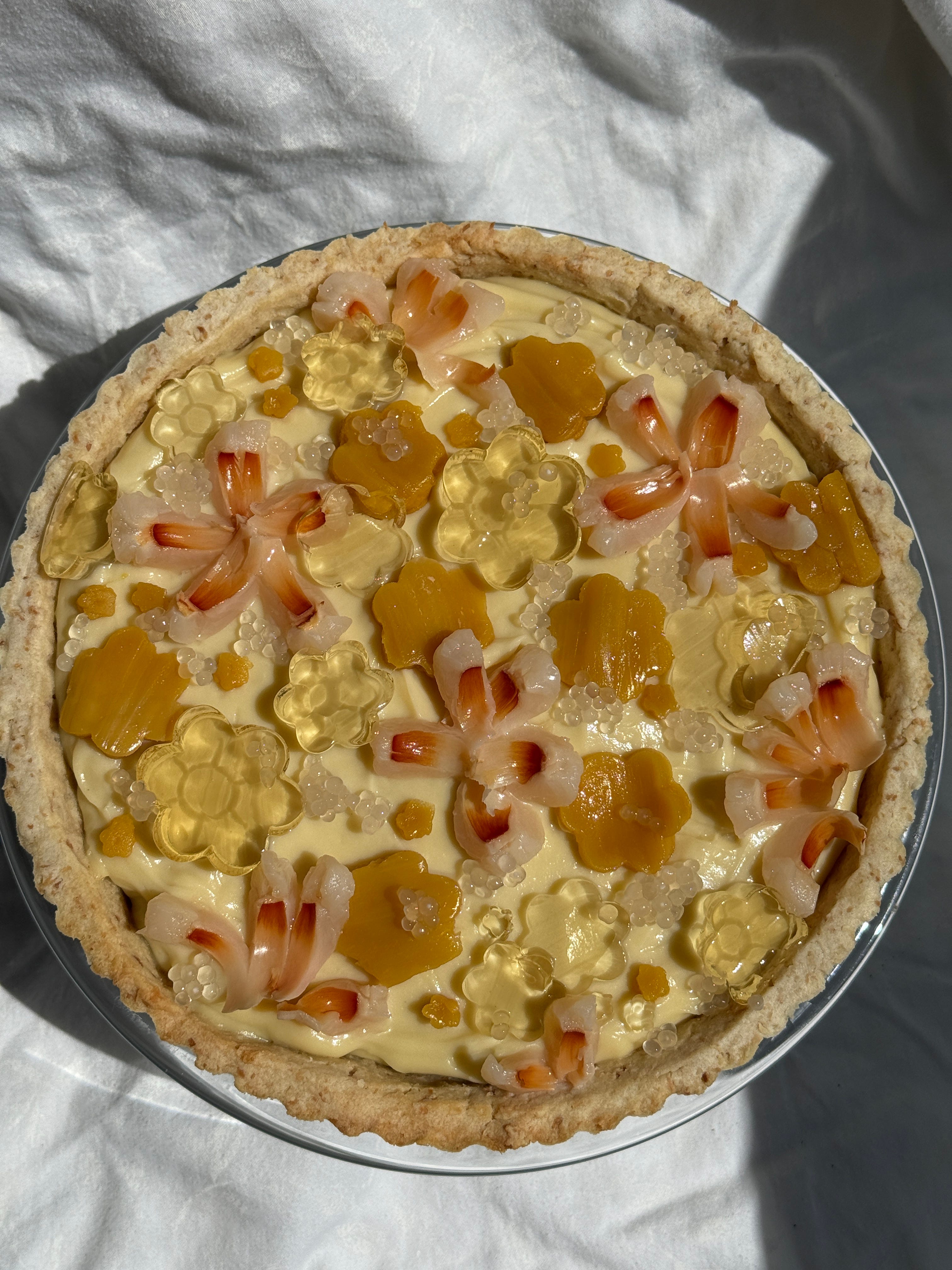
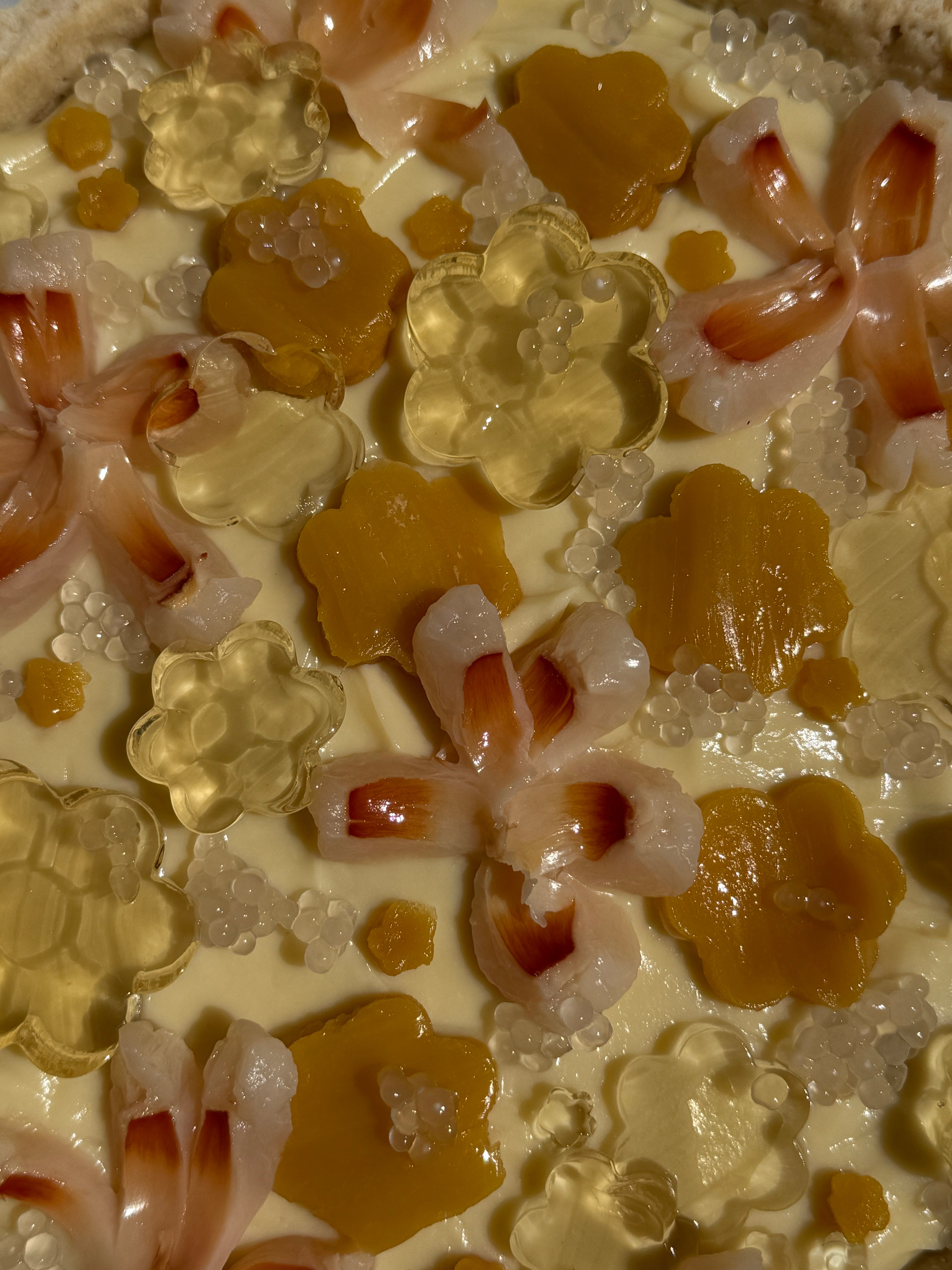
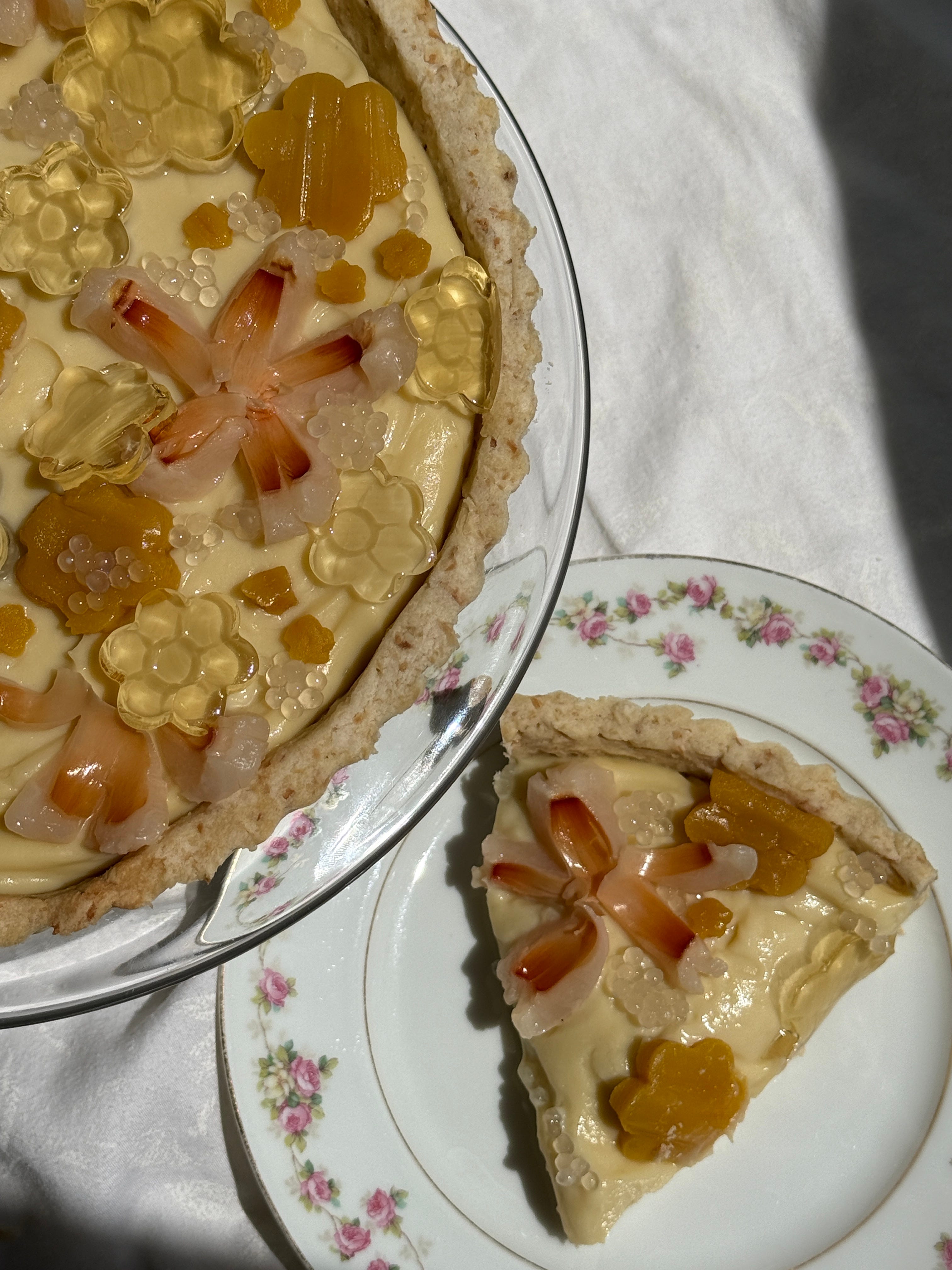
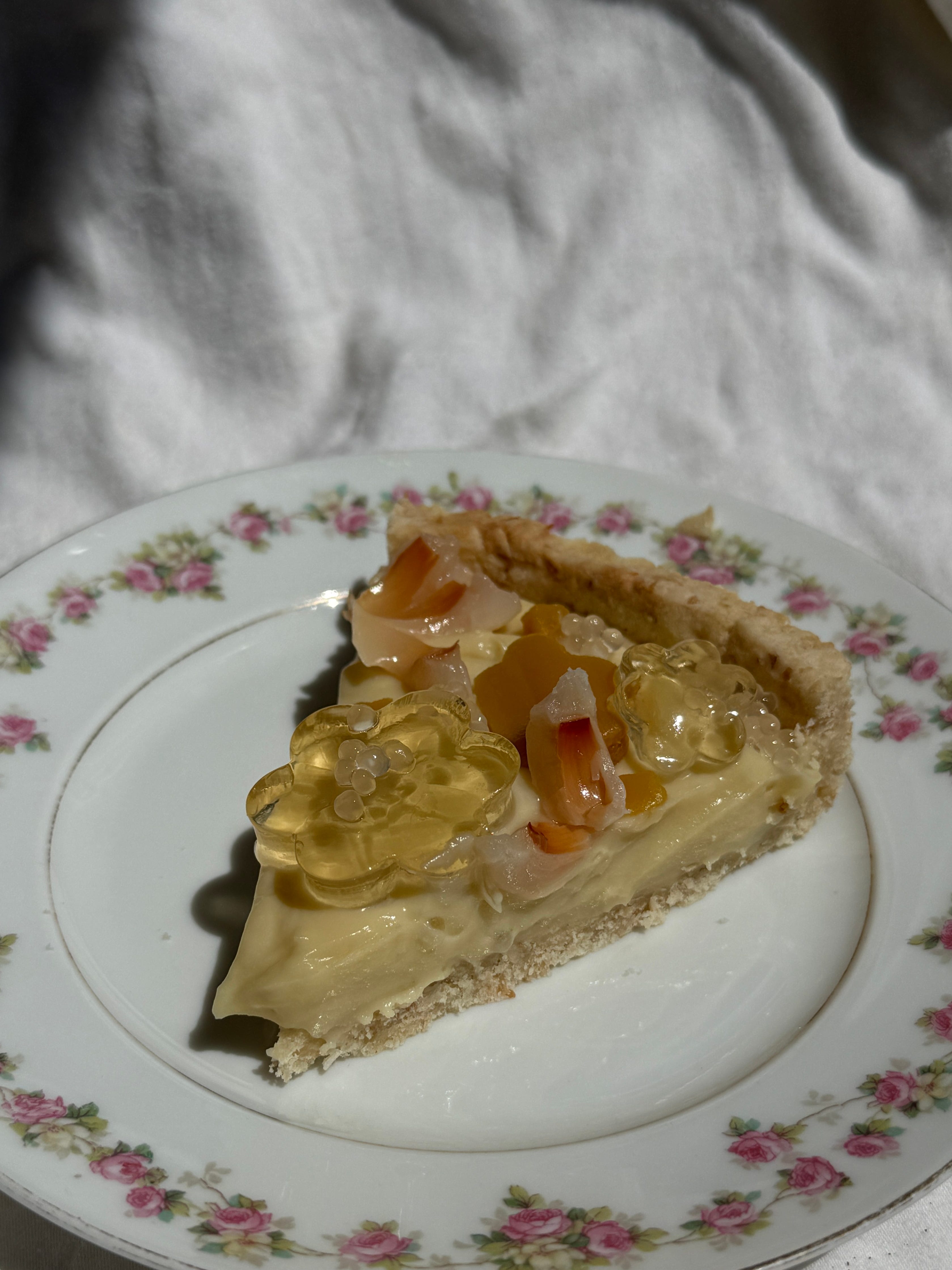
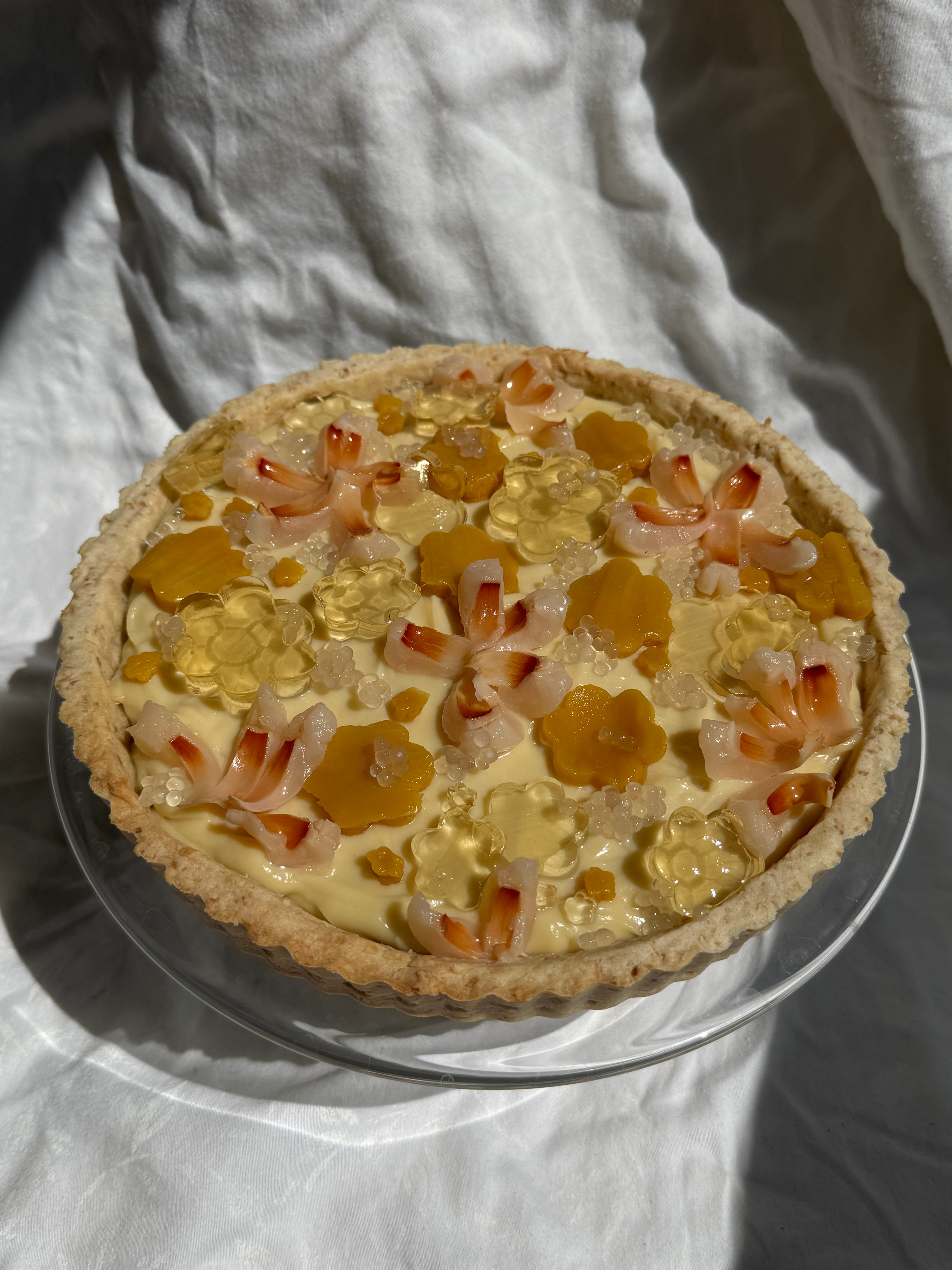
Ché Fruit Tart
Ready in 2 hours, plus chilling. Serves 1 8” or 9” tart.
